
Introduction:
Computers have lately been performing better than humans in things like evaluating square roots or retrieve a web page instantaneously. But, the incredible human brain is still a step ahead when it comes to common sense, inspiration and imagination. Artificial neural networks (ANN) got its design inspired by the structure of the brain. It is the answer to making computers more human like and help machines work more like humans.
What is artificial neural network (ANN)?
Human minds decipher the setting of certifiable circumstances such that PCs can’t. Neural systems were first created during the 1950s to address this issue. A fake neural system is an endeavour to reproduce the system of neurons that make up a human cerebrum with the goal that the computer shall have the option to learn things and settle on choices in a humanlike way. ANNs are made by programming standard PCs to act as if they are interconnected synapses.
What is a Neuron?
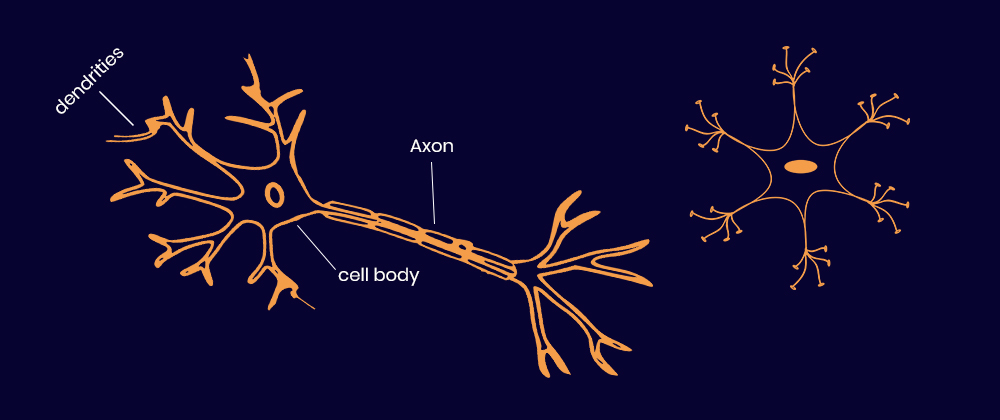
Neuron is considered to be the central component of natural neural network. Neuron collects all the input gathered by human senses, processes this information and conveys executable reactions to muscles. Neuron has three fundamental components that consists of dendrites, axon and cell body or soma. A dendrite acts as an input point for neuron and the axon is the main output structure of neuron. A neuron can have two states one, it fires or it doesn’t fire. When neurons fire there is an exchange of information that happens between them. Two neurons are connected with each other through axon and form a network. This network is called Natural Neural Network (NNN).
How does artificial neural network function?
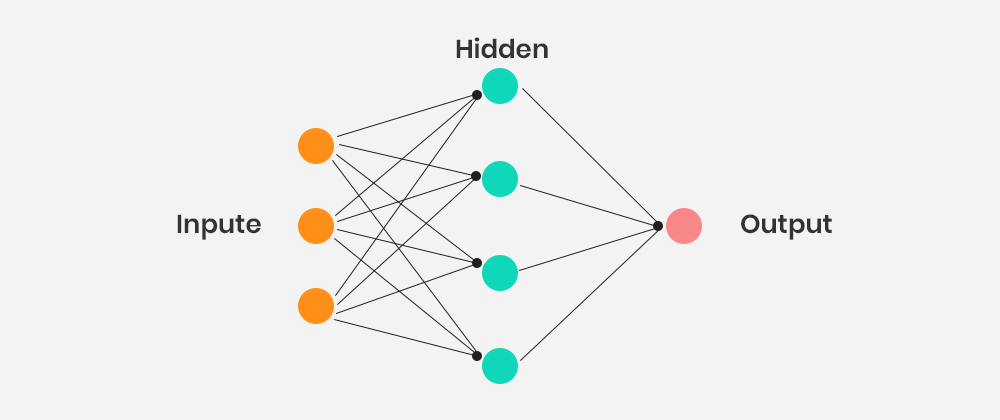
Artificial neural networks utilize various layers of numerical handling to comprehend the data that has been fed into the network. Normally, an artificial neural network consists of millions of dozens of artificial neurons known as units that is arranged properly in a series of layers. All important information reaches the input layer from the outside world that the network intends to learn and process. The data passes through one or more hidden units and the hidden unit ensures that the input is transformed into something that the output unit can put to use.
A huge portion of the neural networks are fully connected from one layer to another. The higher the number of the connection weights the greater influence it holds which is quite similar like the human brain. The data goes through each unit making it aware about the data. Output units on the other side are where the network responds to the data informing that the action was processed.
Those who specialize in this field and refer to as cognitive neuroscientists, they seem to know the basic handling and functioning of the artificial neural network. These Cognitive neuroscientists have learned a tremendous amount about the human brain since computer scientists first attempted the original artificial neural network. One of the things they learned is that different parts of the brain are responsible for processing different aspects of information and these parts are arranged hierarchically. So, input comes into the brain and each level of neurons provide insight and then the information gets passed on to the next, more senior level. That’s precisely the mechanism that ANNs are trying to replicate.
Artificial neural networks are often portrayed as weighted directed graphs where directed edges present with weights are viewed as links between neuron outputs and inputs and artificial neurons in correspondence to the nodes.
These Artificial Neural networks collect all the inputs from the world with the help of patterns and images present in vector form. The Mathematical representation for these inputs is x(n) for n number of inputs.
Once all the data is gathered, then the individual inputs are further multiplied by their analogous weights. In order to solve any of the problems that occur, weights showcase the information acquired by the neural network while carrying out this step. Weight is used to calculate the strength of the interconnection between the individual neurons in a neural network.
All these weighted inputs are then summed up inside the computing unit. In case 0 is obtained as the weighted sum, bias is added to the output to make it non-zero or to increase the system responses. The input and weight of a bias is always equal to ‘1’.
Generally, the sum of all the weighted inputs is any numerical value lying between 0 and infinity. To achieve our desired value, we set up a threshold value so as to restrain our response. Finally, the sum is then passed through an activation function to achieve needful results.
When a set of transfer functions are employed in order to obtain desired output is known as activation function. It can be linear as well as non-linear.
Sigmoidal hyperbolic functions
They
possess an ‘S’ shaped curve. Tan hyperbolic function is specifically used to
make approximations for the output from net input.
Defined as: f(x) = [1/1+exp(-?x)] where, ?
represents steepness.
Binary – In binary functions, there are only two outputs, 0 and 1. We need to set up a threshold value here. When the net weighted input entered is larger than 1, output is assumed as 1 or otherwise 0.
How does an Artificial Neural Network learn?
It is important to understand how a neural network learns there are a few steps related to it. When the weights inside are revised after necessary changes it leads to learning in a neural network.
For instance we decide to consider inputs in pattern form for two different types of patterns: I & O and let b-bias and y represent the desired outputs.
All the input patterns will be classified into pattern ‘I’ or ‘O’.
These are the steps taken:
1.9 inputs from x1 — x9 linked with bias b (i.e. input with weight value 1) is entered in the network for the initial pattern.
2. At the very start, weights are initialized to 0.
3. They are then renewed for individual neurons using the formula:
Δ wi = xi y for i = 1 to 9 (Hebb’s Rule)
4. Finally, new weights are calculated using the formulae:
wi(new) = wi(old) + Δwi
Wi(new) = [111–11–1 1111]
5. Next, we input second pattern to the network but we don’t initialize the weights to zero. Initial weights used in this case are the final weights we obtained after presenting the first pattern.
6. Process 1-4 is performed likewise for second inputs.
7. The new weights now are Wi(new) = [0 0 0 -2 -2 -2 000]
Hence, these weights represent the learning capability of the network in classifying input patterns accurately once all the above mentioned steps are followed.
What are artificial neural networks used for?
A huge number of modern applications primarily focus on solving complicated problems and that is possible with the use of the ANN model. Artificial neural networks are highly used in computer vision, robotics, pattern recognition, natural language processing, self-driving cars and numerous other applications.
Eventually, as the networks learn to process from data they can classify a given data set into a predefined class. This can be used to achieve trained predictions of outputs that are expected from a given input and can identify a special feature of data, further classify the data using that special feature.
There are large number of online uses of the Artificial Neural Algorithm that includes Google Maps that uses it to figure out the best possible route to reach the destination. There are various constraints like road condition, traffic, past experiences, weather etc. that need to be considered as conditions in order to know the best path. Google Places also uses neural network to improve the image quality.
Most of the image search and speech recognition applications like Alexa, Bing use artificial neural network model to differentiate between two images and the accent of user. ANN generally facilitates a pattern recognition that large assists in replacing human efforts with artificial intelligence or computer knowledge.
Conclusion
It is evident that Computers now possess the ability to understand the world the way human beings would due to the growing influence and power of artificial neural networks.
There are various technological developments that happen at a rather rapid pace and one day soon these neural networks should also witness plenty of updates that only time will tell us.

Have an Idea?
Contact Sysbunny and the team of experience engineers will help you understand this particular topic in detail and in case if you have any mobile application idea then feel free to reach out. Contact Usor Email UsAbout Post Author